State News
Michigan's Budget Battle: Why Three House Democrats Broke Ranks and What It Signals About Spending Priorities
By Staff · July 17, 2026
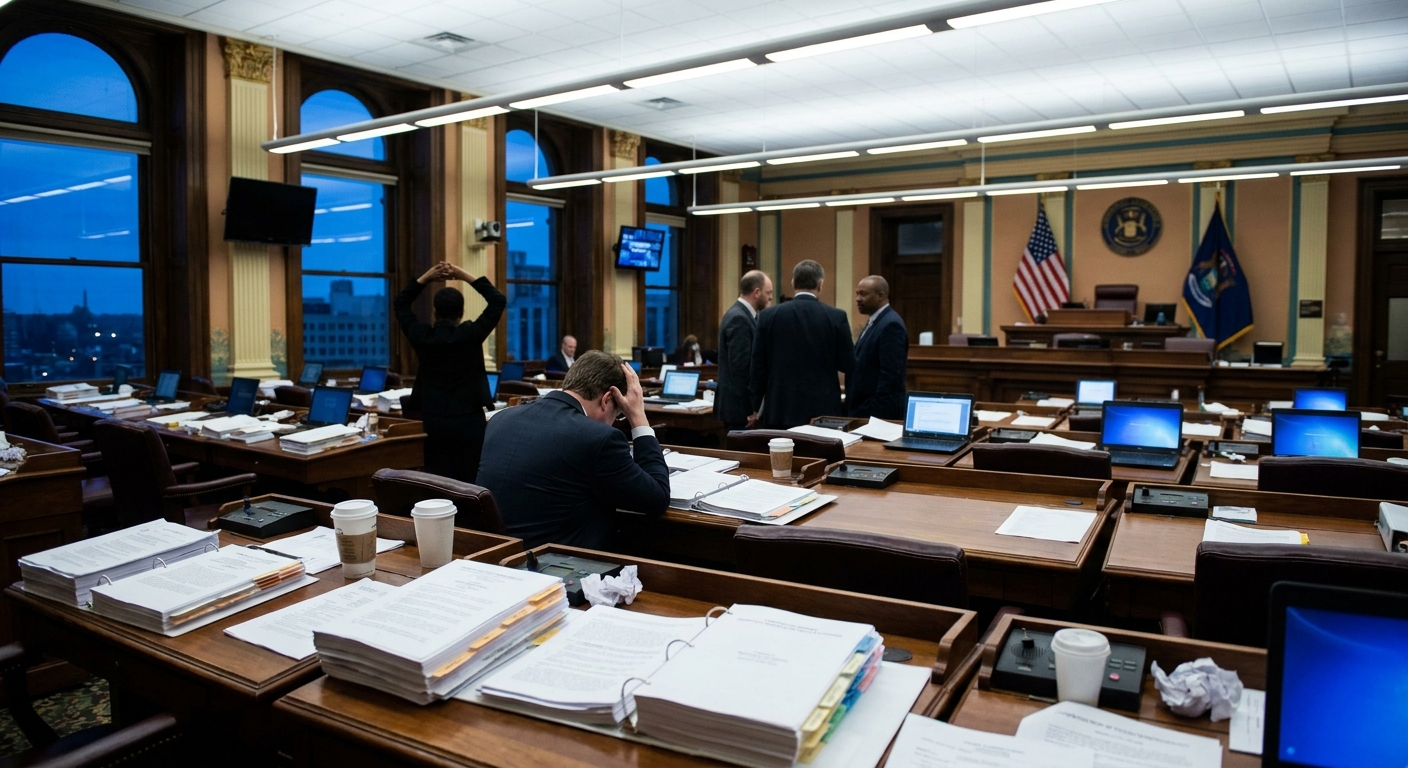
As an all-night Lansing session ended just before dawn July 3, three House Democrats voted against a $75.2 billion FY2027 budget that will help shape funding for Warren classrooms, city services and roads. Their break with party leaders was about both the rush to pass the plan and the spending priorities inside it.
The Legislature passed the package just before 9 a.m. July 3, after a session lasting roughly 23 to 24 hours that came two days after the statutory deadline. Before leaving for the Independence Day holiday, lawmakers also passed more than 60 additional policy bills. Reps. Dylan Wegela, District 26; Regina Weiss, District 5 (Oak Park); and Veronica Paiz, District 10 (Detroit), voted against at least part of the budget. Their objections carry direct stakes for Warren: the budget determines how much state revenue sharing, road funding, and school aid the city and its residents will receive.
The House approved the general omnibus budget bill 99-7, with two Democrats—Wegela and Weiss—joining five Republicans in opposition. The school aid bill passed 99-8, with three Democrats—Wegela, Weiss and Paiz—voting no. The Senate passed the main budget bill 27-9.
The late push came after weeks of stalled negotiations. By mid-June, legislative leaders still had not agreed on spending targets or a broader budget framework, with Democrats divided over economic-development funding and other priorities. Once a final deal emerged, rank-and-file members were left with a simple choice: vote yes or no on the entire package.
The dissenting Democrats cited an opaque, rushed process that released 1,000-plus-page bills with minimal time for review and prevented public input. Dylan Wegela, State Representative, District 26, said, "We didn't get the 1,000 plus page budget until about 90 minutes before we had to vote on it."
Dylan Wegela, State Representative, District 26, said, "They do this on purpose. I don't think that that's how democracy should work or function, and I think most people in the state of Michigan would agree with that."
Lawmakers also did not receive the usual House Fiscal Agency briefing, where members can question analysts about what a bill does and how it affects state finances. After conference committees settled the two main budget measures, the House and Senate could only vote up or down; amendments were no longer an option.
Dylan Wegela, State Representative, District 26, called it the "worst budget that I have seen come through this chamber since I was elected."
Wegela's strongest objection was over education spending. He opposed the budget for moving money from K-12 education to higher education, community colleges and the state general fund, characterizing it as balancing the budget on the backs of the schools. The plan draws a record amount from the School Aid Fund for universities and community colleges—about $400 million more than the current budget—shifting higher-education costs away from the General Fund.
The FY2027 K-12 budget totals $19.8 billion, about $1.5 billion less than the FY2026 level. Much of that reduction reflects the expiration of nearly $2 billion in federal support, which state funding only partly replaces—though dissenters argue the state could have backfilled more generously rather than shifting School Aid Fund dollars to universities.
Wegela also criticized the budget for including excessive corporate subsidies, labeling $4.4 billion in subsidies as "legislative malpractice" that should instead fund public schools and infrastructure. He objected to allowing private schools to access public funds for school lunch and safety, viewing it as a slippery slope toward vouchers.
Veronica Paiz, State Representative, District 10 (Detroit), voted against the school aid bill but supported the general omnibus budget. She did not provide a detailed public explanation for her vote but reposted a video in which Wegela called the budget the worst he had seen during his time in office.
Regina Weiss, State Representative, District 5 (Oak Park), responded to the missed deadline and closed-door process with a proposed constitutional amendment that would dock the governor's, House speaker's and Senate majority leader's pay after July 1 and require school aid bills and amendments to be posted publicly for set periods before lawmakers vote.
Despite the dissent, the passed budget includes money Warren residents will see in their schools and on their roads.
It raises the base per-pupil foundation allowance 2.5% to $10,300—$250 more per student than the prior year—an increase that applies to every district, including Warren Consolidated Schools. A new weighted formula directs nearly $1.7 billion to at-risk students and English learners. The budget also sets aside $325 million for school operations.
For cities and infrastructure, the package includes $1.6 billion to sustain revenue sharing for counties, cities, villages and townships. County revenue sharing and public-safety revenue-sharing grants remain at FY2026 levels under the existing distribution formula, rather than an expanded one.
Michigan's long-term road funding plan provides about $1.6 billion in FY2027, including a $481 million increase for roads and bridges, with more than two-thirds directed to local roads. The new Neighborhood Roads Fund provides nearly $1.8 billion in ongoing funding for state and local roads over four years, divided among county road commissions, city and village road agencies, and the State Trunkline Fund. State infrastructure funding identifies work on I-696 from Southfield through Warren as a key project benefiting the city. The budget also includes $125 million for 135 legislatively directed spending items expected to benefit cities and villages statewide.
Overall, the plan closes an approximately $1 billion revenue gap without new taxes or fee increases and preserves the state's rainy day fund.
The process concerns—90 minutes to read a 1,000-page budget, no Fiscal Agency briefing, and no amendment opportunity—raise genuine questions about legislative oversight, regardless of whether the final numbers benefit Warren. But the dissent represents a small minority: only two Democrats voted no on the general omnibus, and only three on school aid, in a House that approved both bills overwhelmingly.
The FY2027 budget awaits the governor's signature; once signed, Warren will receive the per-pupil increases, revenue sharing, and road dollars it allocates. The fracture may signal ongoing tension within the Democratic caucus over process transparency and spending priorities, especially if leadership continues to negotiate budgets behind closed doors and release final bills with minimal review time.
Warren residents should watch whether the weighted funding formula and Neighborhood Roads Fund deliver the promised dollars as the fiscal year unfolds, and whether legislative process reforms—such as Weiss's proposal to require public posting periods—gain traction.