State News
Campaign Finance Ballot Fight Heads to July 24 Canvassers Meeting — What's at Stake for Michigan Voters
By Staff · July 17, 2026
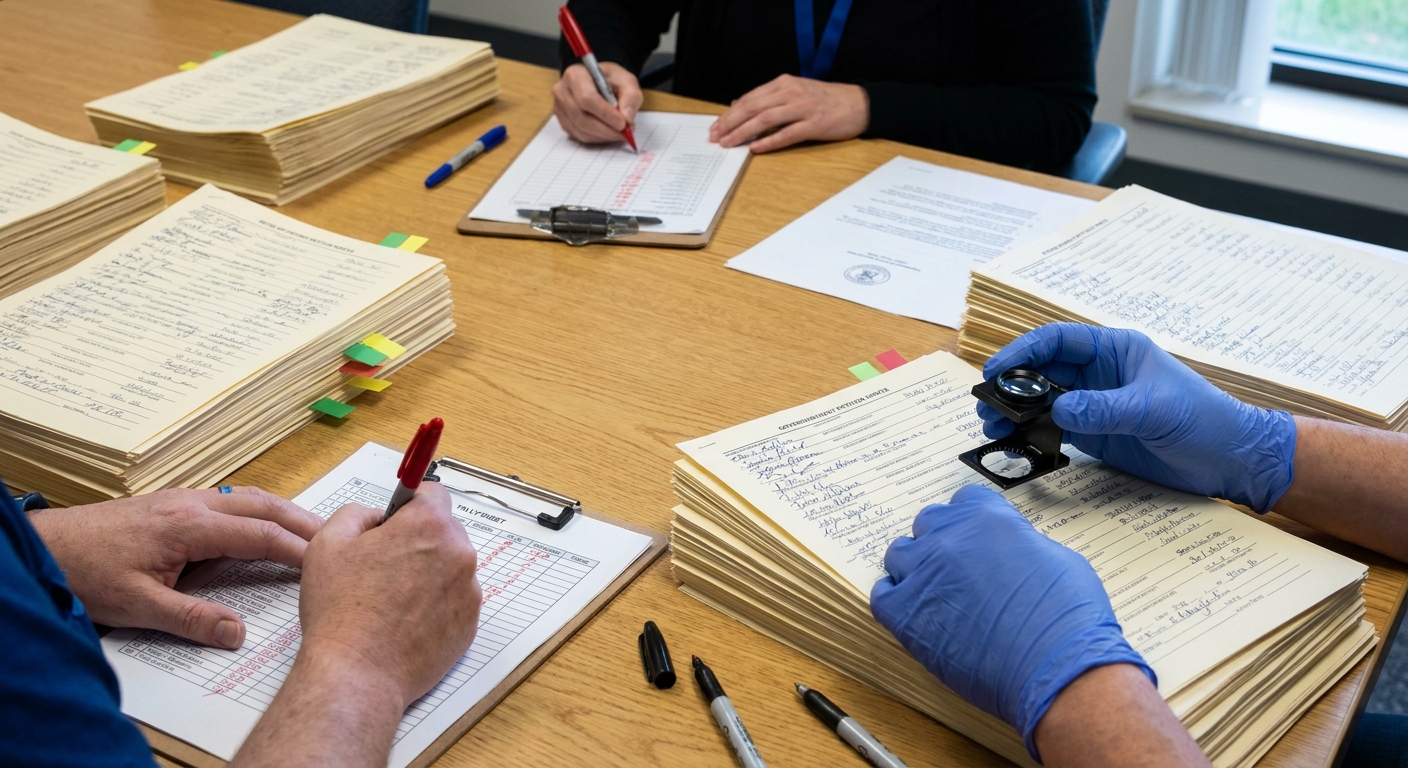
Before Michigan voters can weigh in on campaign-finance reform this fall, four state canvassers must decide whether the question reaches the ballot at all.
The Michigan Board of State Canvassers canceled its regularly scheduled July 31 meeting and will instead hold a special session at 10 a.m. July 24 at the Binsfeld Office Building, 201 Townsend Street, Lansing. The meeting will be livestreamed through the Department of State's YouTube channel and on Michigan Senate TV. The agenda will be posted closer to the meeting date.
A challenge filed by Protect MI Free Speech, a ballot question committee that includes the Michigan Chamber of Commerce, argues the Michiganders for Money Out of Politics petition contains too many invalid signatures to qualify for the November ballot. The outcome will determine whether Michigan voters get a direct say on tightening campaign finance rules or whether the challenge knocks the measure off the ballot before it reaches the polls.
The petition would ban political contributions and certain dark-money election spending by regulated monopoly utilities and corporations with large state or local government contracts over $250,000 annually. It would also expand Michigan's campaign finance disclosure rules, closing the issue-ad loophole and requiring donor disclosure for election-related communications, including online ads, and tighten reporting requirements for outside spending groups that reference candidates or ballot measures.
The Michiganders for Money Out of Politics campaign is led by the Taking Back Our Power coalition, which includes Clean Water Action, Climate Cabinet, Detroit Action, Michigan League of Conservation Voters, Progress Michigan, Voters Not Politicians and MI United.
Bureau of Elections staff counted 108,891 petition sheets containing 561,282 signatures. The signature requirement for a statewide initiated statute in Michigan's 2026 election is 356,958 valid signatures from registered voters.
"We turned in more than 200,000 signatures above the required threshold," Sean McBrearty, co-chair of Michiganders for Money Out of Politics, said.
Under Michigan's statistical validation process, 636 or more valid signatures in a 1,000-signature sample result in automatic certification, while 635 or fewer lead to denial. Protect MI Free Speech contends that only about 568 of the 1,000 sampled signatures are valid, far below the certification threshold. The challenge alleges irregularities such as signatures from deceased individuals, possible forgeries, duplicates, mismatched handwriting, incorrect addresses and unregistered voters. The group is asking the board to deny certification and launch a broader investigation.
The sampled signatures were released to the public on June 25, 2026, triggering a uniform deadline of July 10, 2026, at 5:00 p.m. for filing challenges. The state elections bureau is reviewing the signatures and the challenge and is expected to make a recommendation to the board.
The Board of State Canvassers is composed of four members: Richard Houskamp (Republican), serving as chair; Mary Ellen Gurewitz (Democrat), serving as vice-chair; Paul Cordes (Republican), serving as a member; and Heather Cummings (Democrat), serving as a member. The board is required by law to have two Republicans and two Democrats.
If the board determines 636 or more of the sampled signatures are valid, the petition will be certified and a 100-word ballot summary approved for the 2026 ballot. If it finds 635 or fewer, certification will be denied and the measure will not appear in November. The board could also order a broader investigation into the signatures, as requested by Protect MI Free Speech, which would extend the timeline and outcome uncertainty. Either way, voter access to direct democracy on campaign finance reform hinges on a single meeting in Lansing, not on turnout in November.