Local News
Revived Brownfield Program Could Reshape Warren's Old Factory Sites — But With New Guardrails
By Staff · July 17, 2026
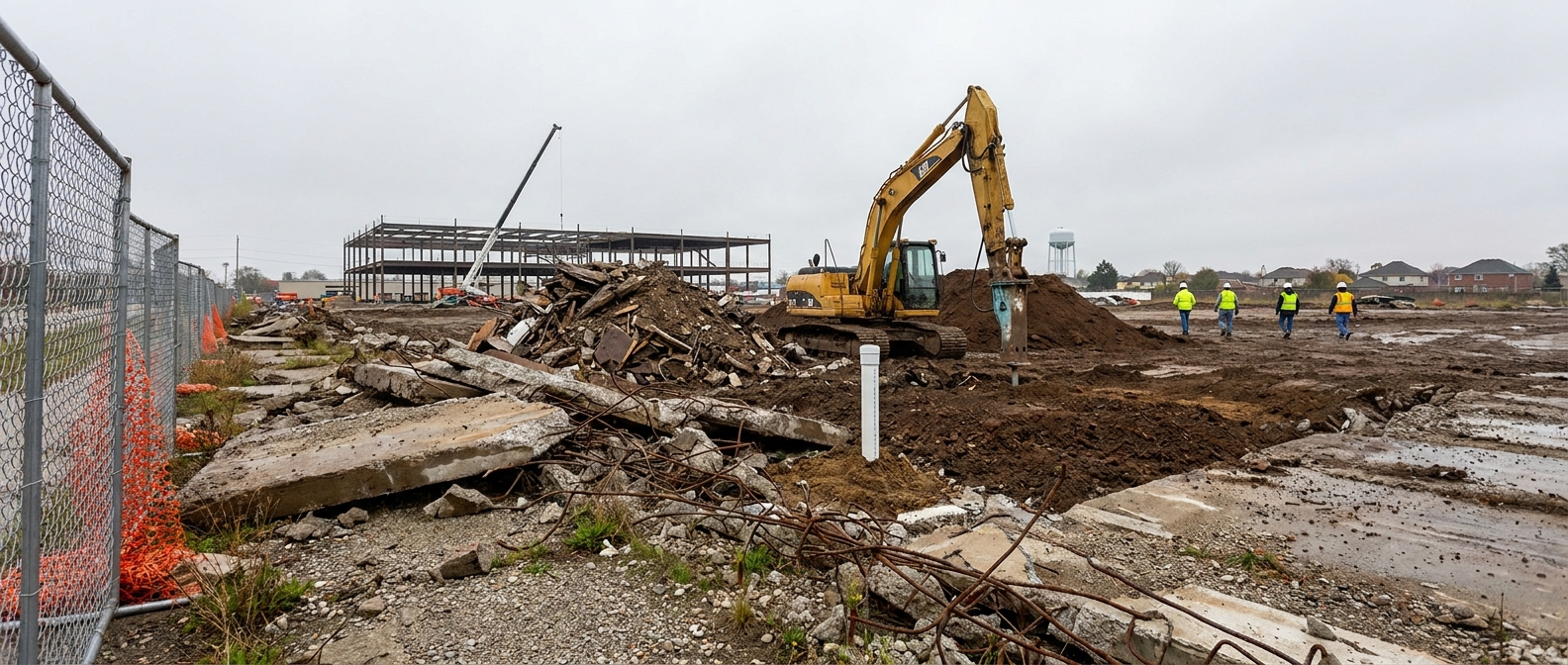
At Mound and Nine Mile Roads, Warren can see what a second life for a factory site looks like. The former GM Warren Transmission plant shut down for good in 2019, ending 78 years of operation. NorthPoint Development bought the property in December 2021 and remade it as Mound Road Industrial Park, completing Phase I with a $140 million investment in four Class A industrial buildings and hosting a ribbon-cutting ceremony in May 2023.
The project relied on a brownfield tax-capture plan valued at $28.6 million over 20 years to fund approximately $28.7 million in property cleanup costs and is expected to bring more than 800 construction and operational jobs to Warren. NorthPoint Development and Colliers International are actively leasing industrial space at the Mound Road Industrial Park as of 2026.
The U.S. EPA is also supporting brownfields planning along Warren's 9-Mile Road Corridor, targeting contaminated and underused sites for assessment and redevelopment. Now, Michigan's Legislature has sent Senate Bill 723 to Gov. Gretchen Whitmer as part of the FY 2027 budget package on July 3, 2026; the bill would revive and expand the state's Transformational Brownfield Program with new taxpayer safeguards. The revised program would double the statewide tax-capture cap from $1.6 billion to approximately $3.2 billion and extend the program's sunset date to Dec. 31, 2032. Whitmer had not publicly signed or vetoed the bill as of July 17, 2026.
New limits on project size and job counting
Sen. Sarah Anthony of Lansing sponsored Senate Bill 723, with cosponsors including Sens. Rosemary Bayer, Stephanie Chang, Mary Cavanagh, Darrin Camilleri, John Damoose, Mallory McMorrow, Sue Shink, Erika Geiss and Jeremy Moss. The bill passed the Michigan Senate on Dec. 9, 2025, with a vote of 20 to 13, and was among 66 policy bills the Legislature completed and sent to Whitmer just before the July 4 holiday.
Michigan's FY 2027 state budget totals approximately $75.2 billion.
Senate Bill 723 doubles the annual state tax capture revenue cap from $80 million to $160 million, with the additional $80 million required to be wholly attributable to new transformational brownfield projects. Individual projects face an $80 million annual limit on state tax capture and a $300 million total maximum across all tax captures and exemptions.
The legislation includes restrictions barring companies from counting relocated jobs as new jobs, with awards canceled if a business reduces jobs elsewhere in Michigan outside the brownfield location. It limits construction-period tax capture revenues to five years after plan approval and requires project milestones for construction start and completion dates in reimbursement agreements.
Projects using more than $10 million in annual state tax capture revenues or involving more than $100 million in capital investment must undergo third-party underwriting. The revised program also requires affordable housing components, with 20 percent of units designated as affordable for projects seeking 100 percent income tax capture eligibility.
Why the guardrails matter
The Transformational Brownfield Program was created in 2017 to expand incentives beyond cleanup costs to cover redevelopment via tax increment financing, allowing developers to capture income, withholding and sales taxes for up to 20 years. The original 1996 Michigan Brownfield Redevelopment Financing Act faced criticism for limited scope focused mainly on cleanup costs and for inadequate incentives to overcome the liability fears and stigma that led many developers to prefer greenfields.
By 2024, the original program's $1.6 billion total cap was nearly reached with $1.24 billion approved, stalling new projects until the 2026 legislative action.
"We have to ensure that if a company is capturing Michiganders' income taxes, that we are not just transferring those income taxes to shareholders," Sen. Mallory McMorrow said.
"While this legislation is critical for the revitalization of Detroit's riverfront, it's important to recognize that it's critical to all areas of the state," Hassan Beydoun, Group Executive of Economic Development for the City of Detroit, said.
Where Warren stands
Warren falls into the 100,000 to 149,999 population tier for the program, requiring a minimum private capital investment of $75 million to qualify. Minimum thresholds range from $15 million for communities with fewer than 25,000 residents to $500 million for cities with 600,000 or more.
The Mound Road Industrial Park redevelopment used $28.6 million in tax capture over 20 years, well below the new $300 million total per-project cap, suggesting similar-scale Warren projects would fit comfortably within the revised program's limits. Warren's remaining brownfield sites along the 9-Mile Road Corridor and other contaminated industrial parcels will compete for funding from the $80 million annual allocation reserved statewide for new transformational brownfield projects.
The competition is already fierce. The Michigan Strategic Fund approved a $270.7 million Transformational Brownfield Plan in June 2026 to redevelop the former Lakeside Mall site in Sterling Heights, Macomb County, into a mixed-use district with more than 1,500 residential units and 154,000 square feet of new retail.
Next steps for developers
Applications require a $30,000 non-refundable fee for awards under $10 million in annual capture, and $30,000 plus third-party analysis costs estimated at $100,000 to $150,000 for awards of $10 million or more.
The application process typically takes 6 to 10 months from initial concept to Michigan Strategic Fund approval, with the fund required to approve or deny an administratively complete application within 60 days.
If Senate Bill 723 becomes law, the extended sunset date of Dec. 31, 2032, would give Warren developers and city officials more than six years to pursue transformational brownfield projects under the new framework.