Business
Stellantis Invests in Warren Stamping Plant with New Press to Boost Local Manufacturing Capacity
By Staff · July 25, 2026
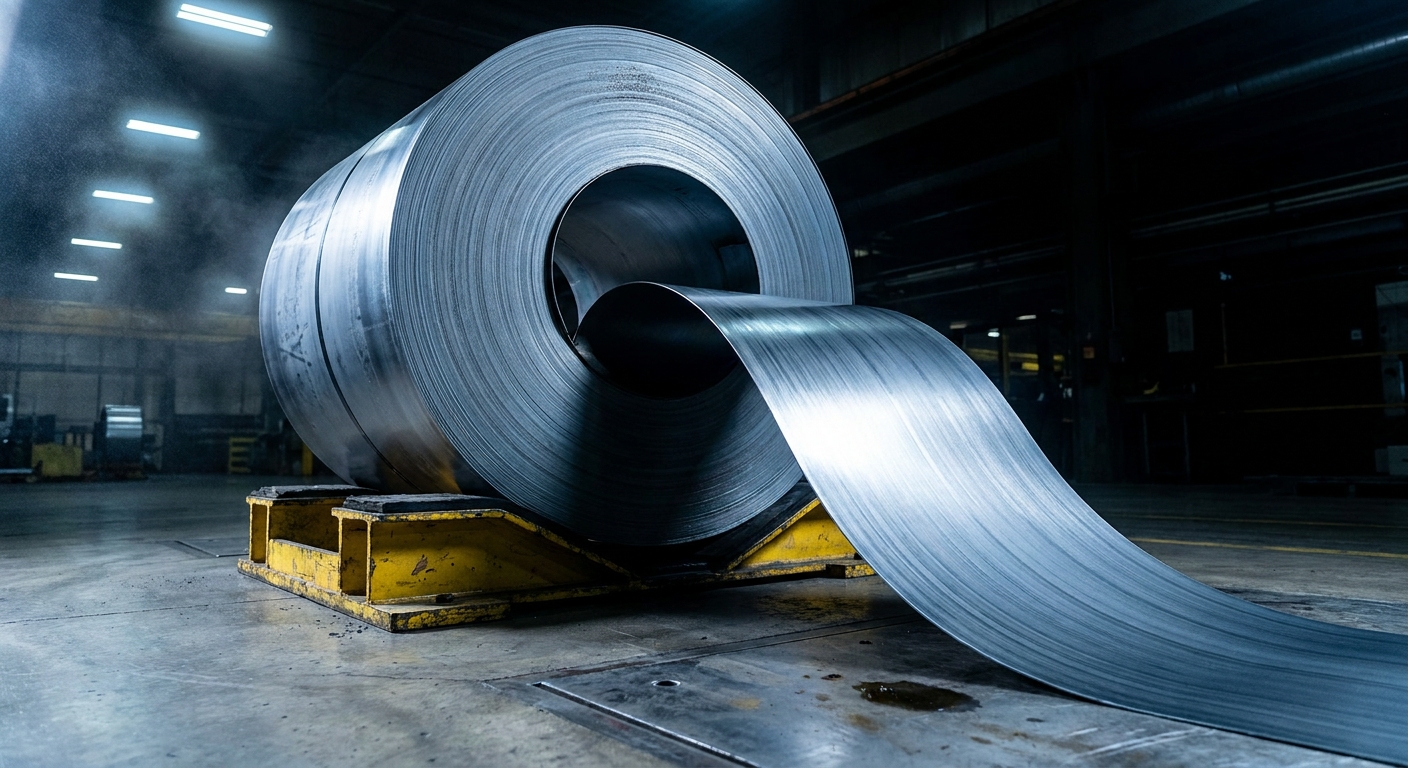
A new machine at Stellantis' Warren Stamping Plant can cut up to 120,000 sheets of metal a week — work the automaker previously sent outside its own operation.
The blanking press brings that coil-processing work in-house for parts used on Chrysler, Dodge, Jeep and Ram vehicles, giving Stellantis more control over a critical part of its supply chain as it pursues higher vehicle volumes. For Warren stamping crews, however, the investment raises a familiar question: Will more work inside the plant mean more jobs and shifts, or more output from the same workforce?
The press came to Warren in 2025 from Stellantis' idled Belvidere Assembly Plant in Illinois. It will supply parts for the Ram 1500, Wrangler, Gladiator and Grand Cherokee, with annual output of between 4.5 million and 6 million parts.
Stellantis recently gave media a look at the equipment and process upgrades at the Warren plant, pitching the work as part of its FaSTLAne 2030 volume-growth plan. The company has not publicly disclosed what the investment cost or whether it will increase total employment, add shifts or require a set number of workers to run it.
That uncertainty carries particular weight after a rough stretch for the plant's workforce. About 170 Warren Stamping employees were temporarily laid off in April 2025 as part of 900 layoffs across five Midwest plants. The plant has since brought back all of its laid-off UAW workers.
UAW Local 869 represents about 800 workers at Warren Stamping. Its president, Romaine McKinney III, said he expects the added capacity to eventually translate into employment growth.
"I expect additional hiring as production expands," McKinney said.
For now, the clearest benefit is that work once handled by an outside supplier will remain within Stellantis' stamping operation. Warren Stamping and Sterling Stamping together employ about 3,000 people, and bringing coil processing in-house keeps the wages and benefits tied to that work within Stellantis' plants rather than shifting them to a supplier workforce elsewhere.
Workers have reason to be cautious. Across the region, manufacturers have often paired investments in new equipment with workforce reductions. GM laid off more than 1,000 workers at Detroit's Factory Zero in June 2026 while installing about 50 new collaborative robots on the production line. Stellantis indefinitely laid off about 400 employees at a Detroit parts manufacturing facility in November 2024 as it worked to cut costs in its underperforming North American business. Since 2020, GM, Ford and Stellantis have collectively eliminated more than 20,000 U.S. salaried jobs, roughly 19% of that workforce.
The potential for more work rests largely on Stellantis' broader growth plans. The automaker unveiled FaSTLAne 2030 on May 21, 2026, calling it a €60 billion, five-year plan to lift revenue from €154 billion in 2025 to €190 billion by 2030, with about 60 new and refreshed models and a 35% increase in North American volume to 1.9 million vehicles.
On June 25, 2026, Stellantis announced an equipment acquisition for both Warren Stamping and Sterling Stamping, saying it would strengthen the plants' ability to provide critical stamped components for North American vehicle production.
The stamping investment also follows a broader regional commitment. In October 2025, Stellantis announced a €13 billion investment across Michigan, Illinois, Ohio and Indiana expected to bring about 5,000 jobs. In Michigan, the plan includes development of an all-new range-extended EV and internal-combustion large SUV at Warren Truck Assembly Plant beginning in 2028.
Those future vehicle programs could send more stamped parts through Warren. For the workers who run the plant — and the families whose budgets rise and fall with its shifts and overtime — the real sign of success will not be the new press on the floor, but whether the work it brings stays attached to secure jobs.